
Key Takeaways
- Chronic pain is common in later life and affects daily routines, mobility, and emotional well-being.
- Gentle movement, quality sleep, and anti-inflammatory foods can help ease discomfort day to day.
- Emotional and spiritual support play a meaningful role in how pain feels and how well it’s managed.
- Assisted living communities offer personalized care and programs designed to support residents with chronic pain.
- Families and caregivers can make a real difference by staying informed and advocating for their loved ones.
When Pain Becomes Part of Daily Life
You wake up in the morning, and you can feel it. You recognize the familiar ache in your lower back. For many seniors, pain often isn’t a singular episode that arises from a bad night’s sleep. It’s a reality that they have to manage every day.
Managing chronic pain in senior years takes a thoughtful, whole-person approach. It’s care that addresses the body, mind, and spirit together. Whether you’re navigating this personally or supporting someone you love, knowledge can help make this journey smoother for you.
We at Hamilton House Senior Living understand that pain often cannot be soothed with just words. That’s why we aim to provide you with practical ways to find more comfort and keep living well. From personalized care to community connection, exploring your senior living options can be a meaningful first step toward lasting relief.
What Chronic Pain Looks Like for Seniors
Arthritis, back pain, and nerve pain are among the most common sources of chronic discomfort in seniors. These conditions can make ordinary tasks like getting dressed, cooking, and going to the bathroom rather difficult.
That daily struggle can affect mood too. When pain limits what someone can do, it can quietly chip away at their sense of self. Frustration, sadness, and hopelessness can often travel alongside the physical symptoms.
Everyday Strategies That Can Help Ease Chronic Pain
Movement and Physical Activity
It may come as a surprise, but gentle movement can help manage chronic pain. Low-impact activities like tai chi, stretching, or chair yoga can loosen stiff joints and lift mood at the same time. It’s not the intensity that matters. It’s the consistency that turns motion into lotion.
Regular activity also helps support joint health by keeping muscles strong. Having a good amount of muscle gives your body the capacity to spread out the physical strain and pressure from daily activities. If you’re running low on ideas to stay active day to day, try reading up on tips to keep joints healthy as you age.
Rest, Nutrition, and Daily Habits
Sleep and pain are intertwined. When sleep quality drops, pain tends to get aggravated the next day. Consider creating a calming nighttime routine and sticking to consistent sleep schedules. These small habits can make a noticeable difference in how the body feels.
What goes on the plate matters too. Foods like leafy greens, berries, salmon, and nuts are known to support the body’s natural response against inflammation. Trading a few processed snacks for whole foods won’t make the pain go away overnight, but steady changes can prove to be significantly helpful over time.
The Role of Emotional and Spiritual Support in Pain Management
The phrase “tugging at the heartstrings” exists for a reason. Stress, grief, and loneliness can actually make pain feel more intense. Conversely, connection and peace of mind can soften it. That’s why emotional and spiritual care are such important parts of living well with chronic pain.
Spiritual support, whether through counseling, reflection, or simply talking to someone, can bring real comfort during hard times. For residents in memory care and assisted living communities, access to spiritual programs offers a gentle space to process their life and surroundings.
Social connections are a vital part of health as well. Joining group activities, sharing a meal, or laughing with friends can ease the anxiety that often comes with chronic pain. Waking up with a community around you every day makes it easy to remember that you’re not facing this alone.
How Assisted Living Supports Seniors with Chronic Pain
Personalized Care Plans
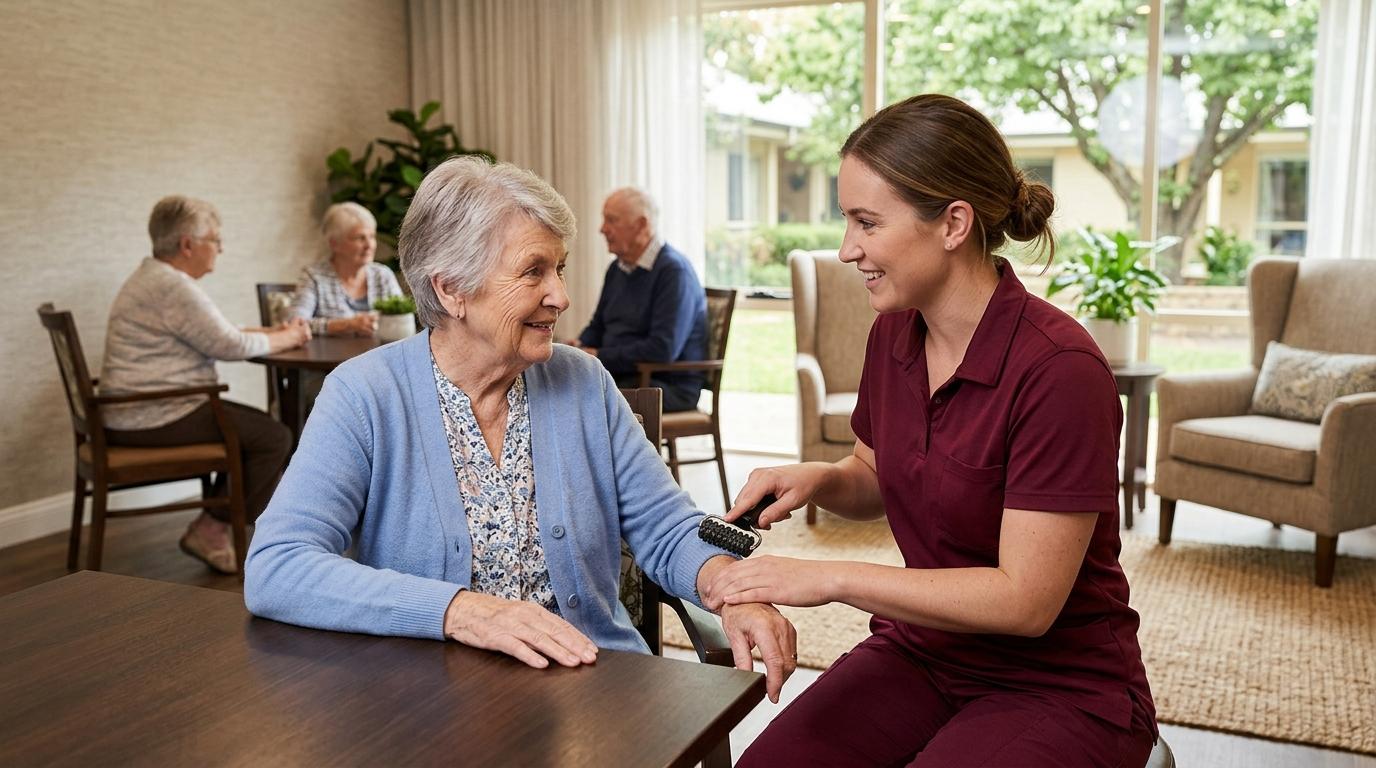
In assisted living communities, care isn’t one-size-fits-all. Each resident receives a care plan built around their needs, including pain management. Pain doesn’t always allow time for appointment coordination. That’s why on-site access to primary and geriatric care can be particularly helpful.
This kind of integrated support helps seniors stay more stable. Rhythms like these keep the exhausting cycle of flare-ups and recovery at bay.
Community Programs That Promote Comfort
Wellness activities in senior living are thoughtfully designed for effectiveness and practicality. Gentle fitness classes, spiritual programs, and social events all work together to support comfort. Our community provides a long list of services and programs that are always available to help residents through a day harder than normal.
A Warm Note for Families and Caregivers
Your presence matters for a loved one who is living with chronic pain. Pay attention to changes in their mood, mobility, or sleep. Ask questions. Speak with their care team. When pain starts taking a toll on their safety at home, knowing when it might be time for assisted living can open the door to more consistent support.
At Hamilton House Senior Living in Cedarburg, Wisconsin, residents are surrounded by a team that cares about their comfort in all aspects. Schedule a tour today if you’d like to see what that looks like with your own eyes.